
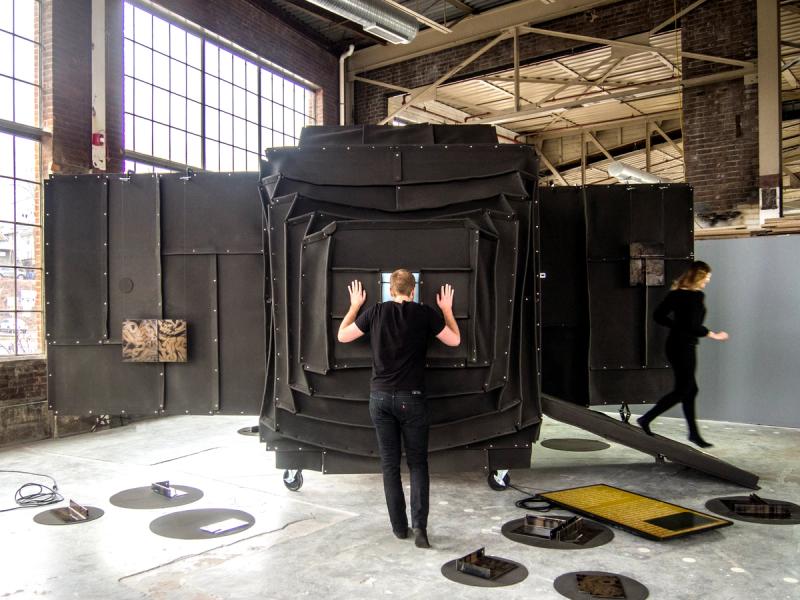

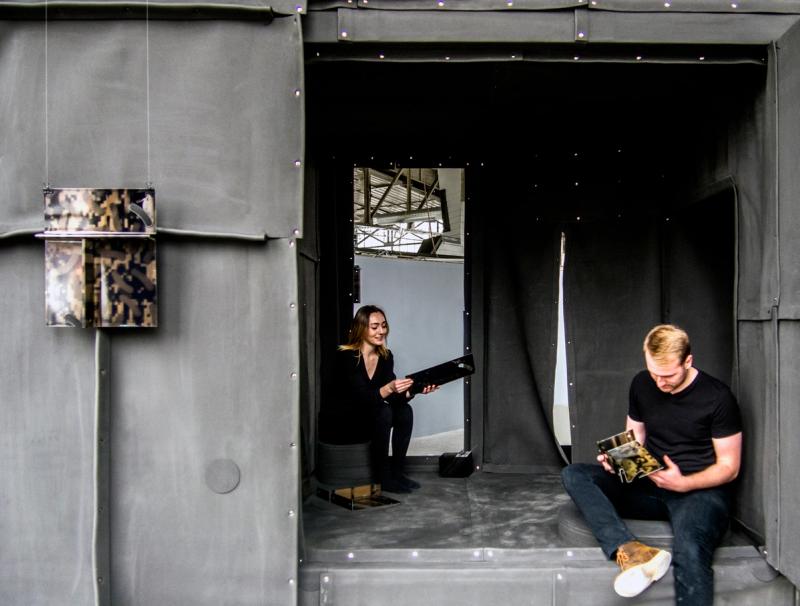

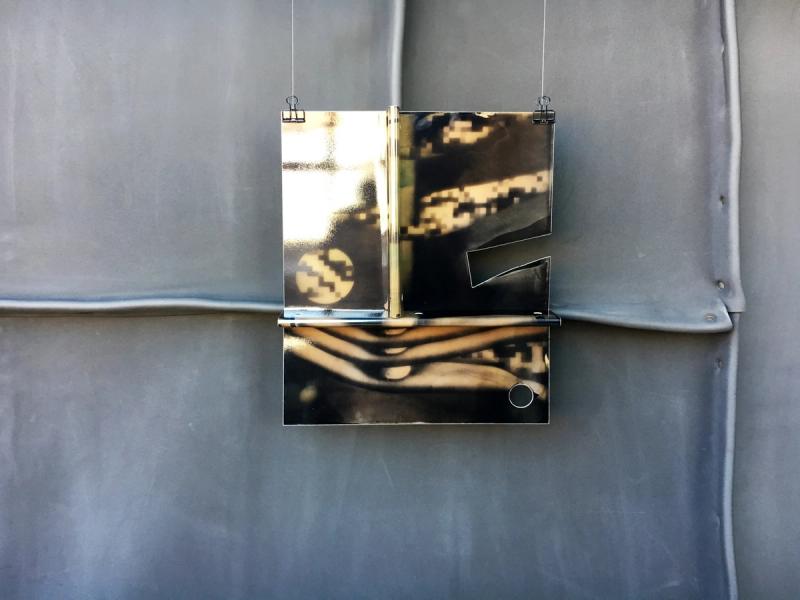

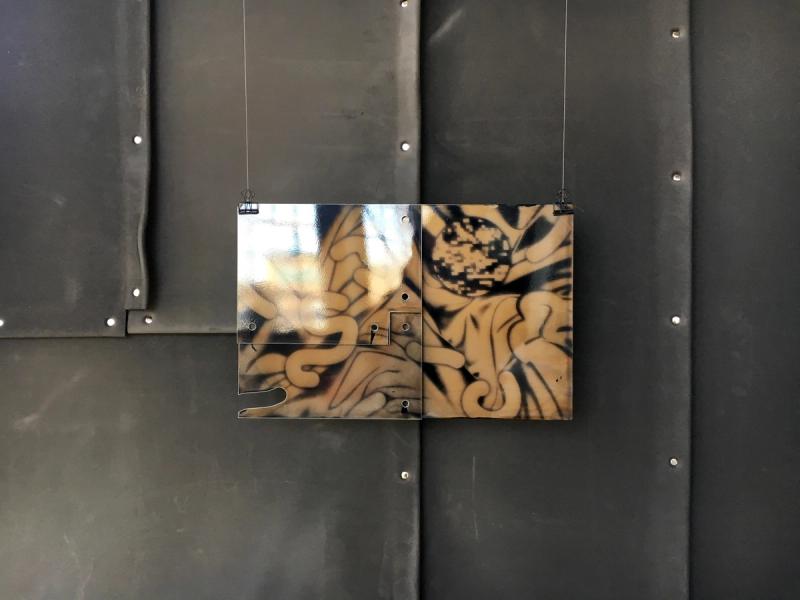

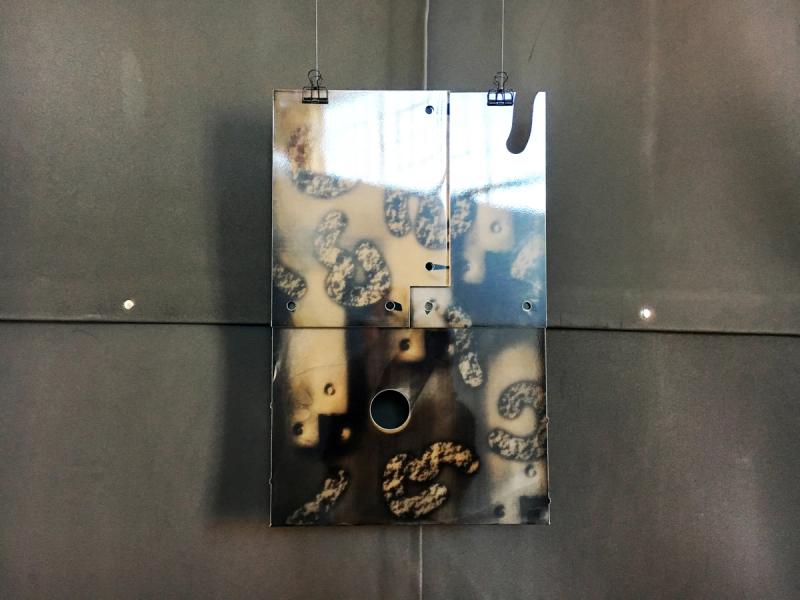

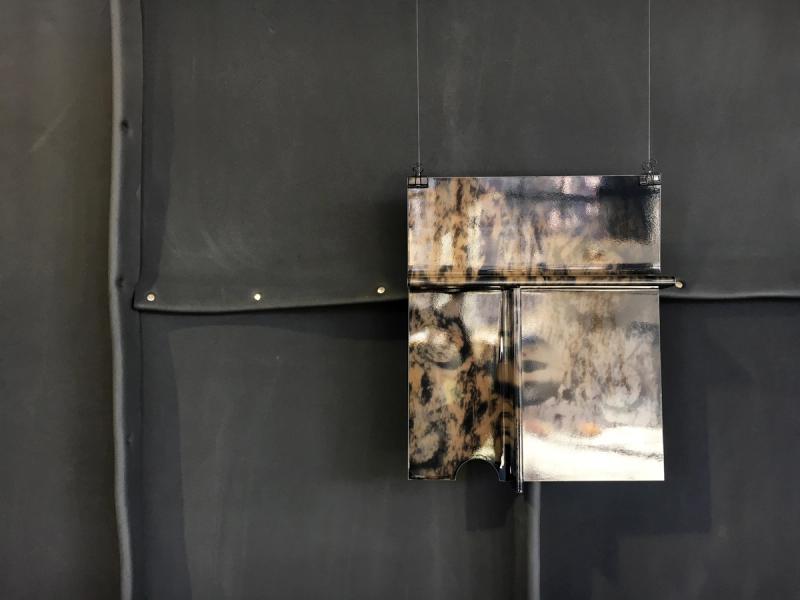

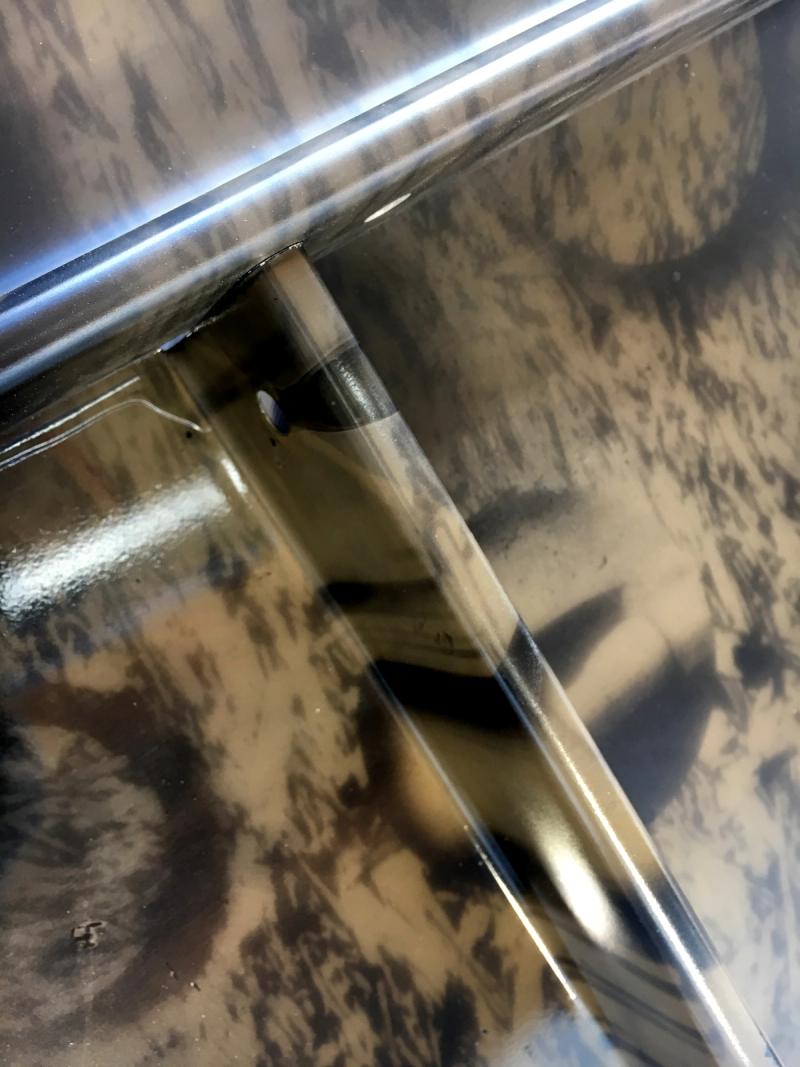

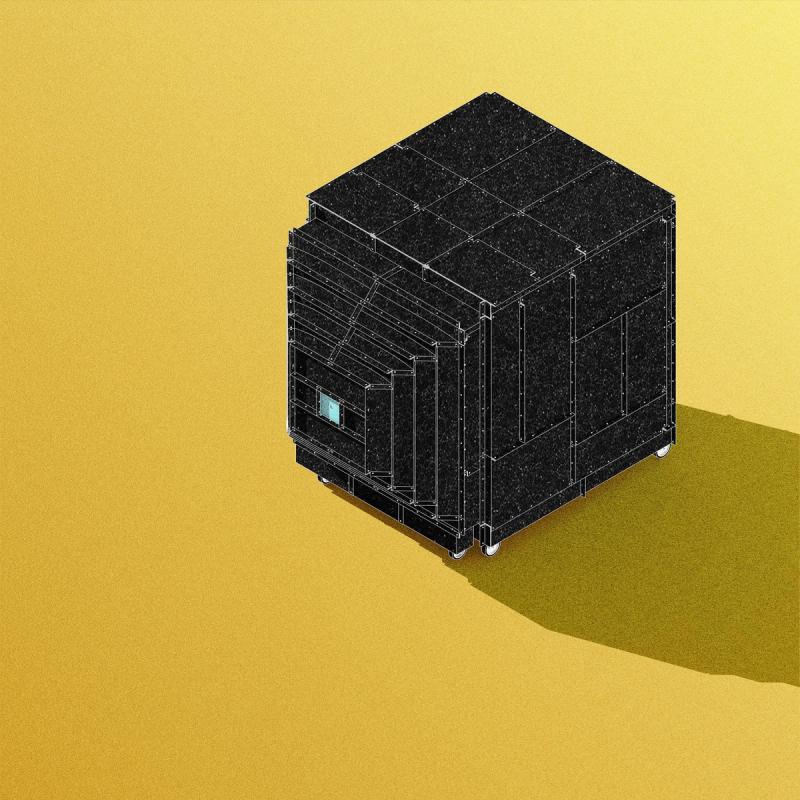

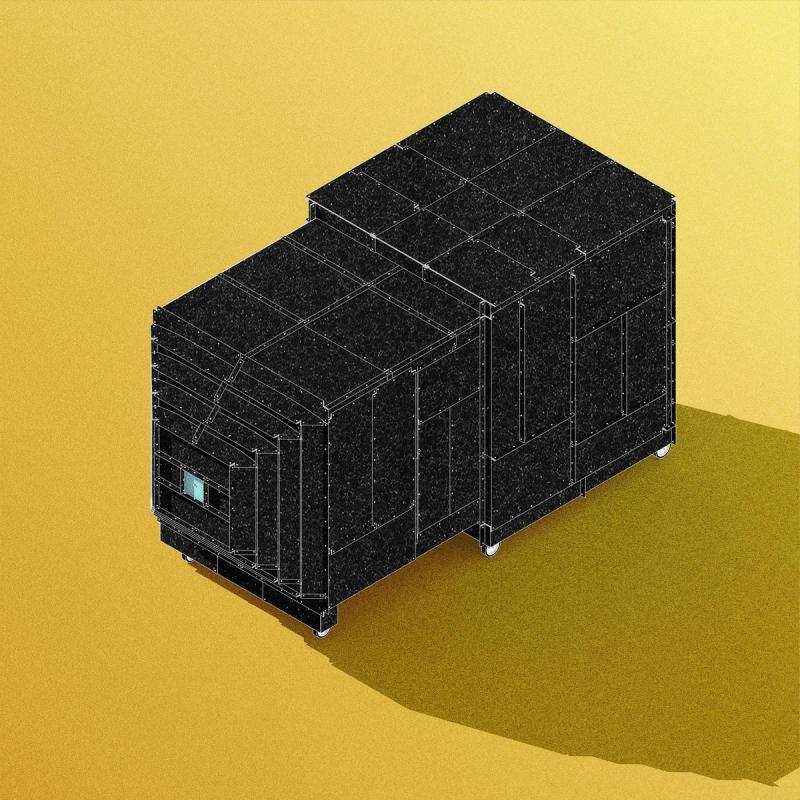

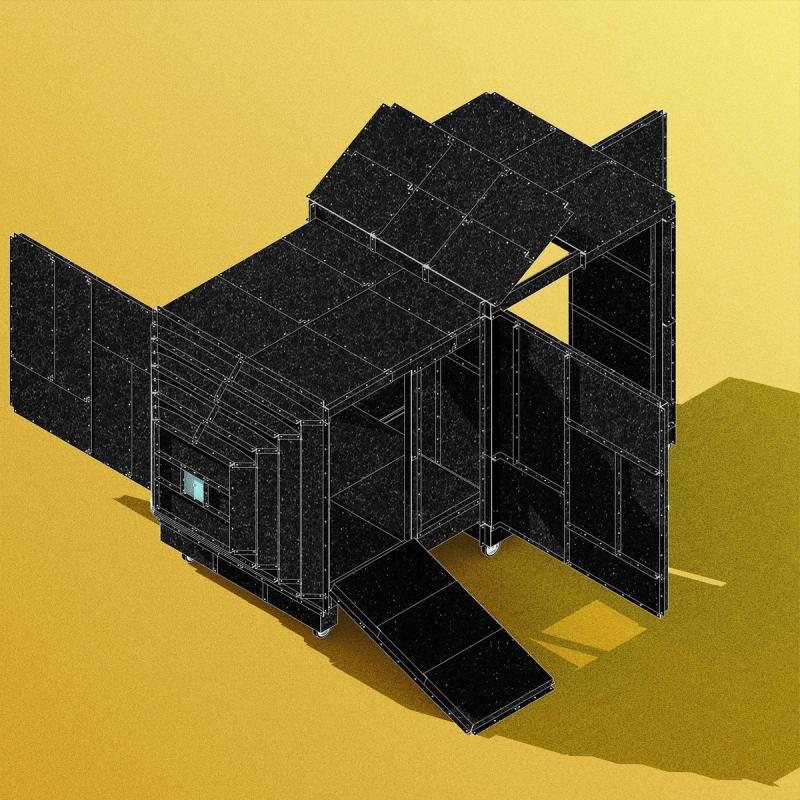

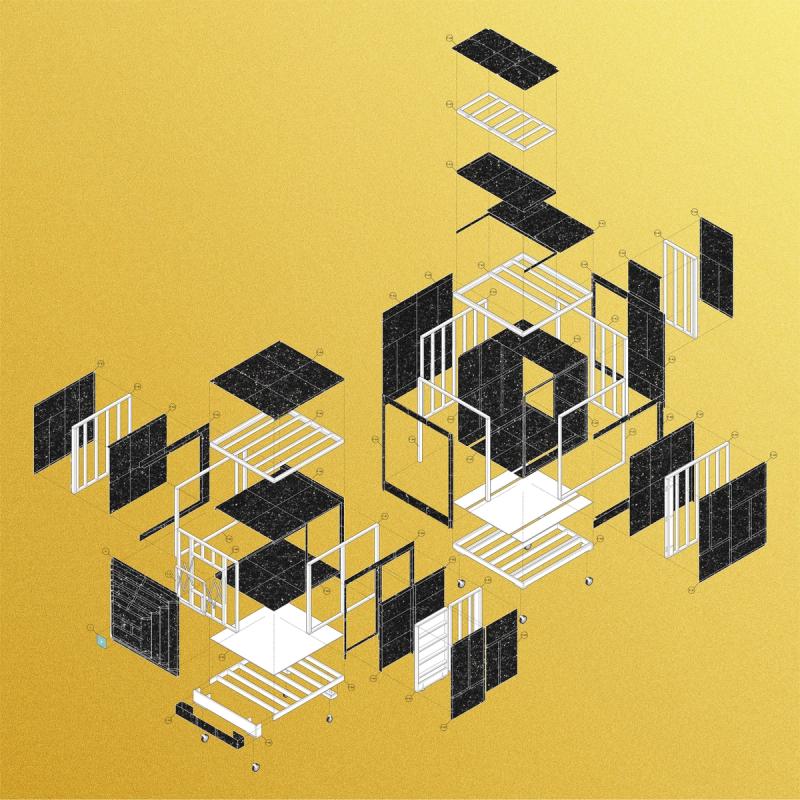

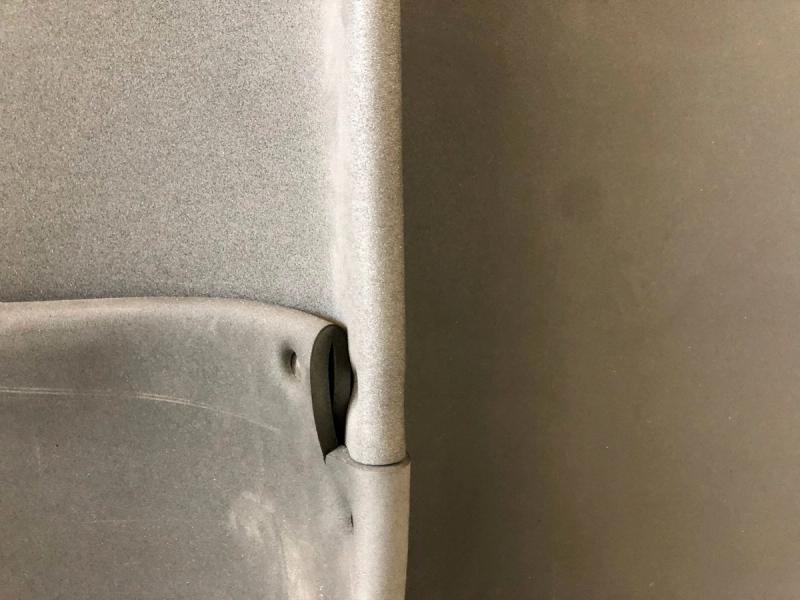

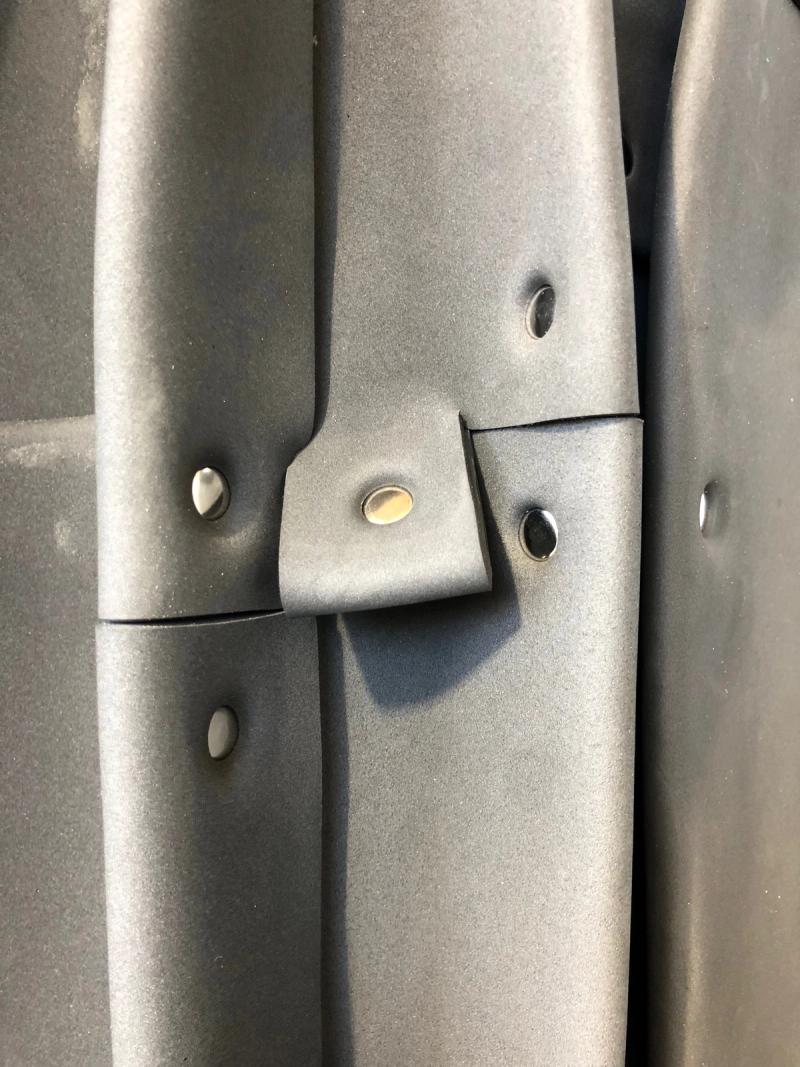

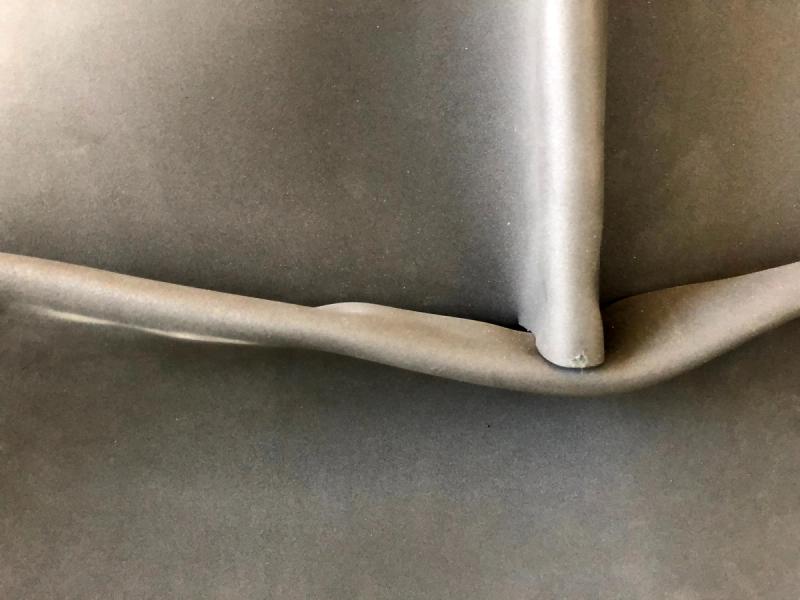

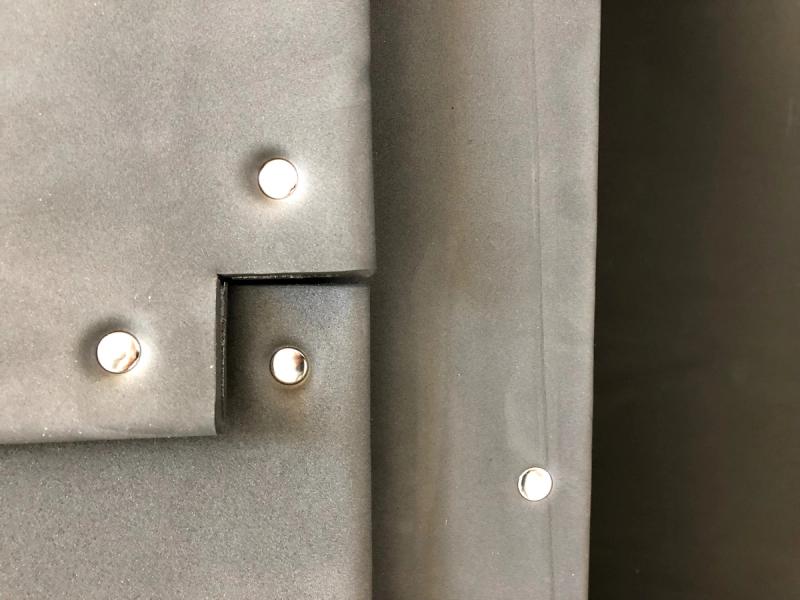

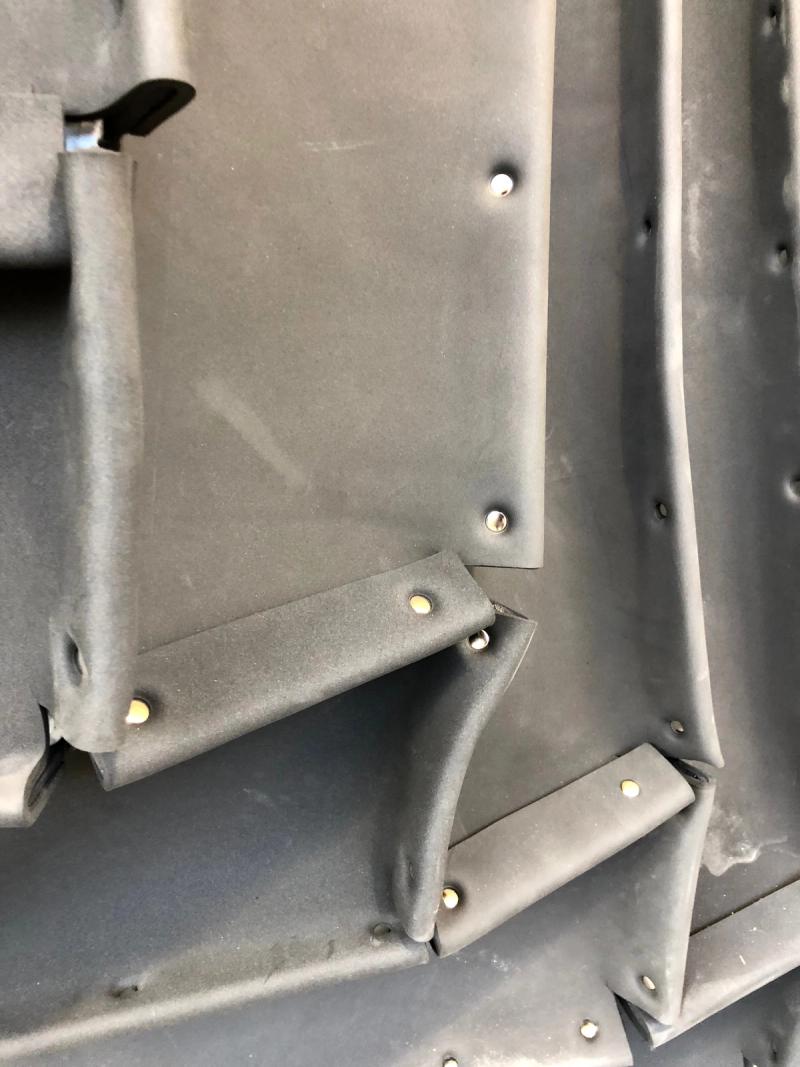

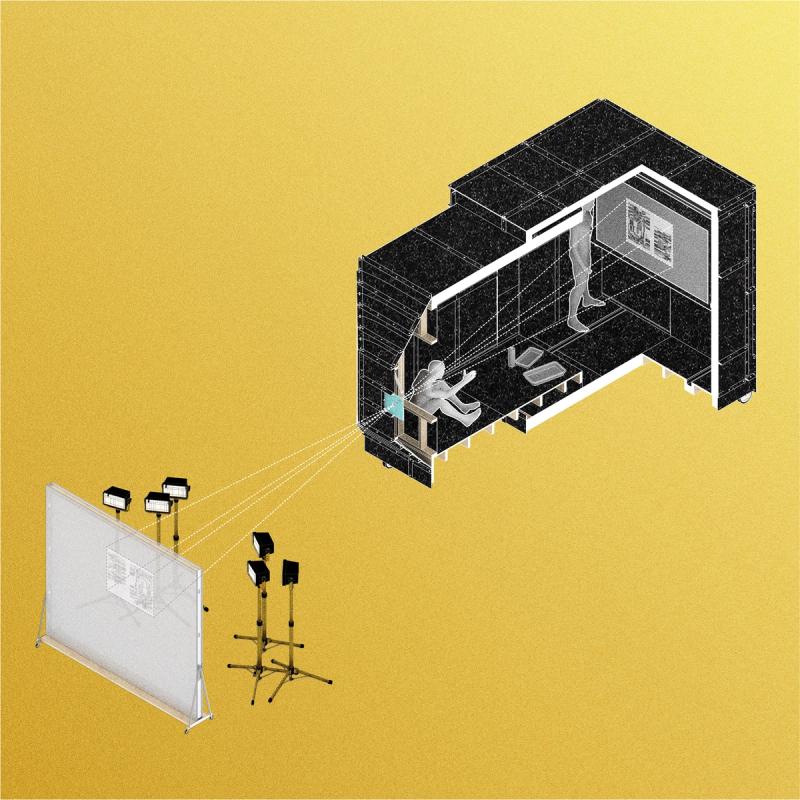

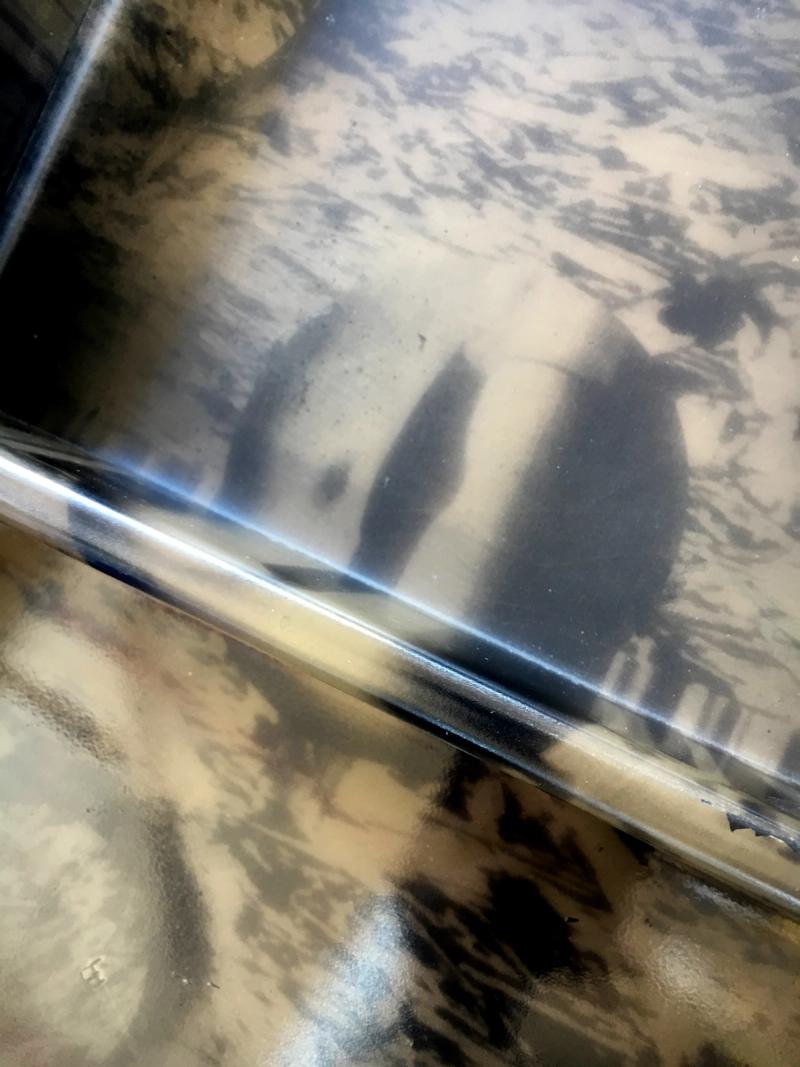

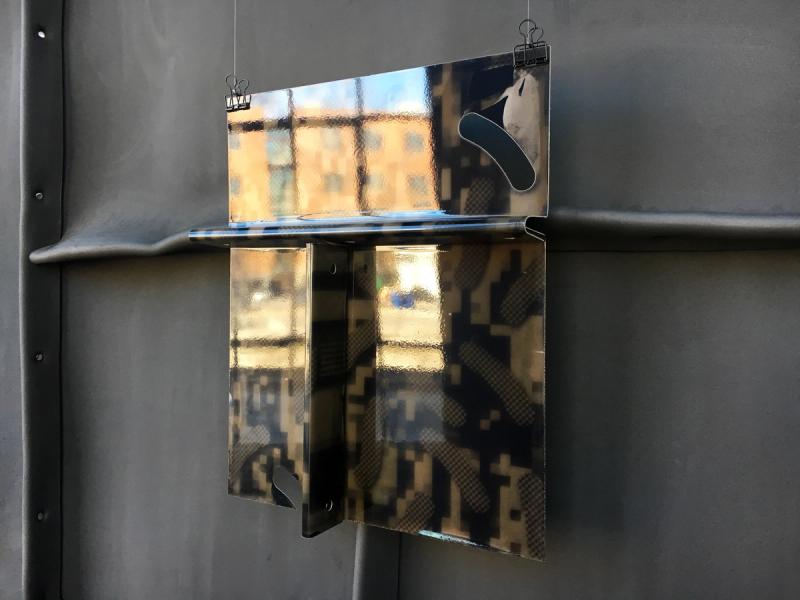

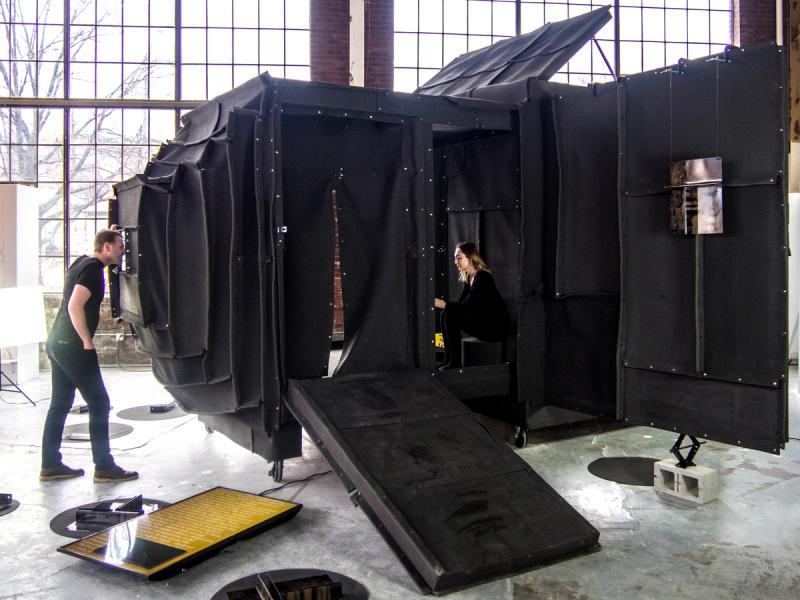

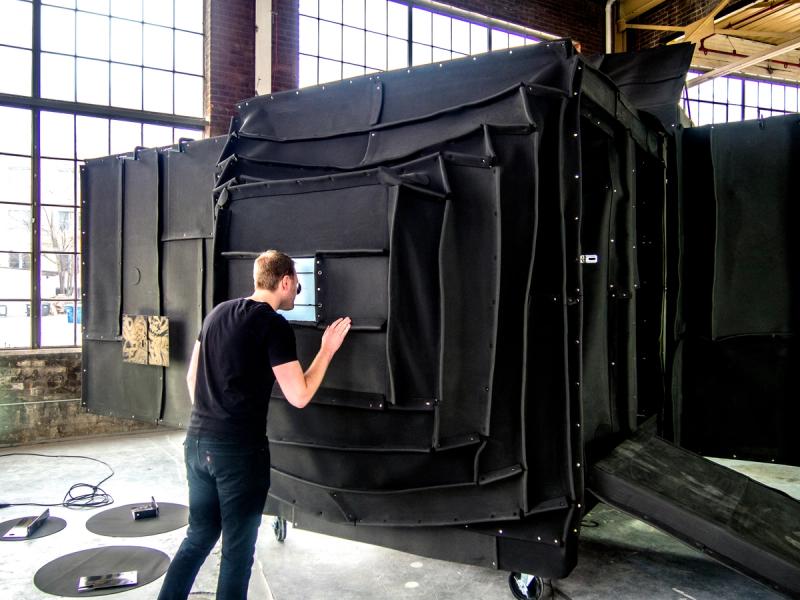

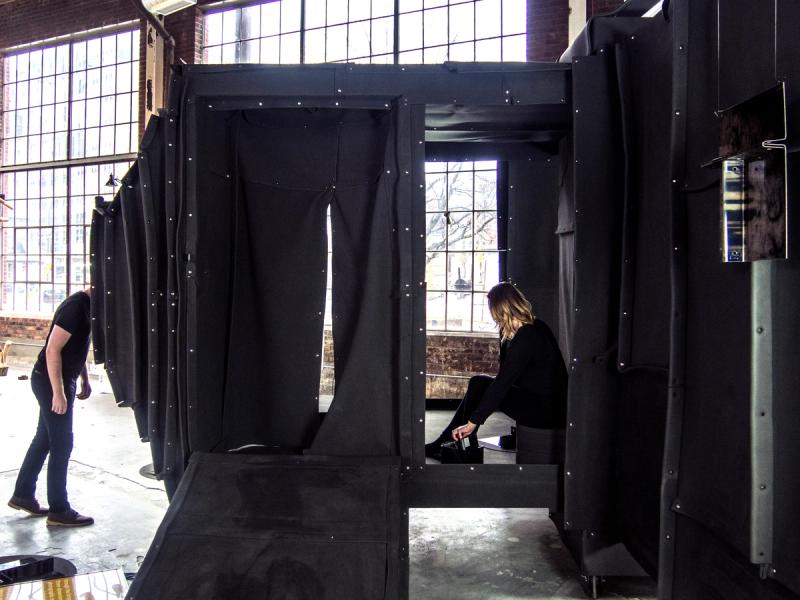

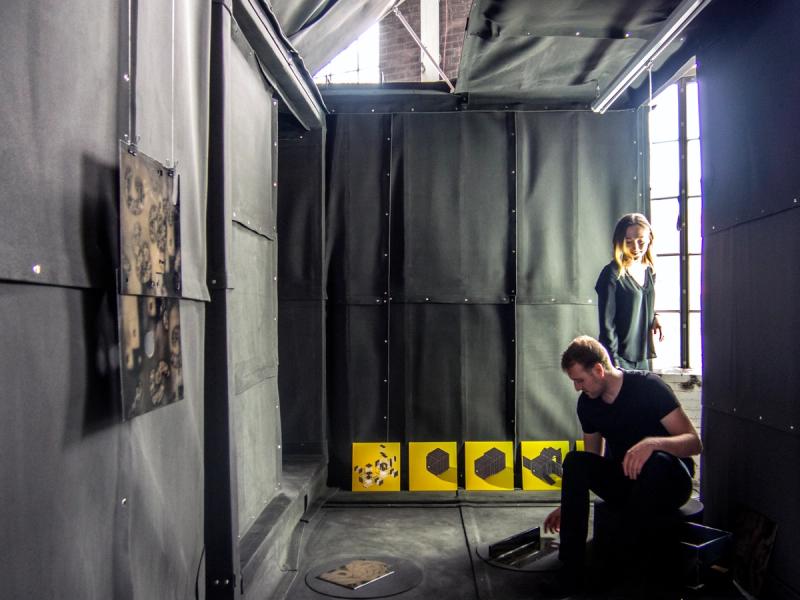


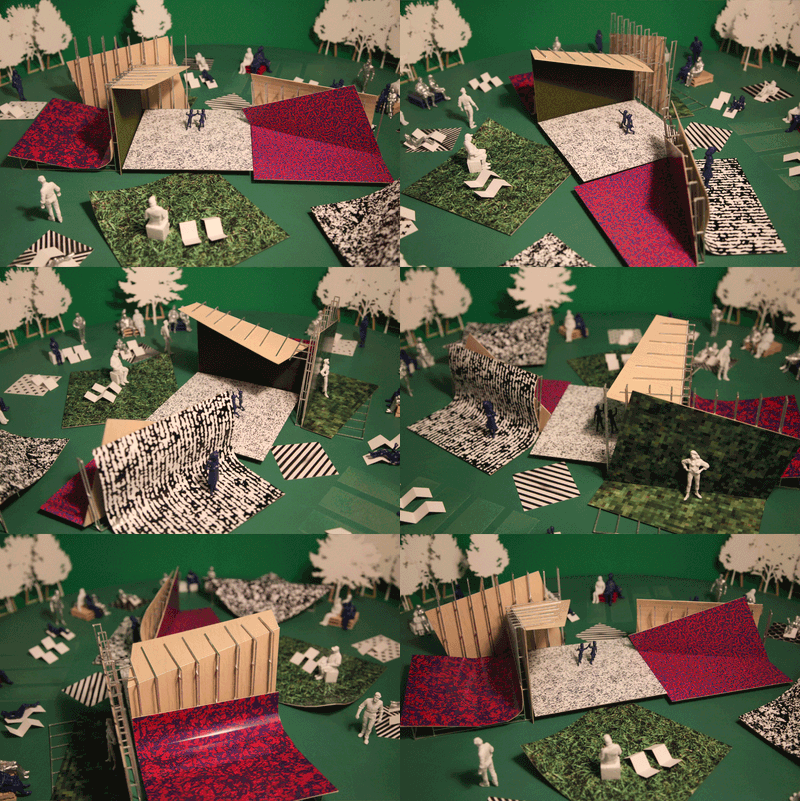

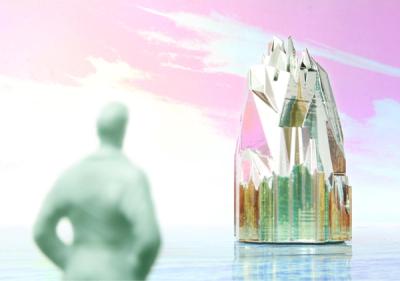

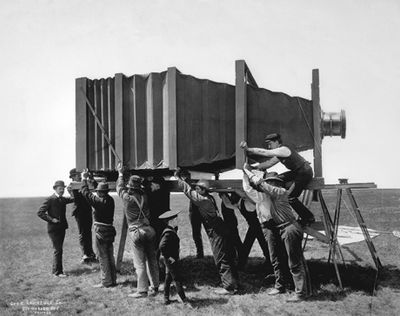

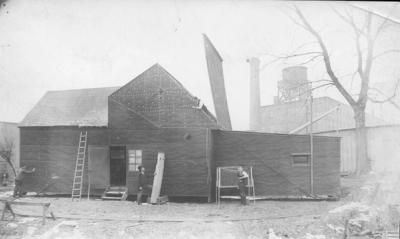

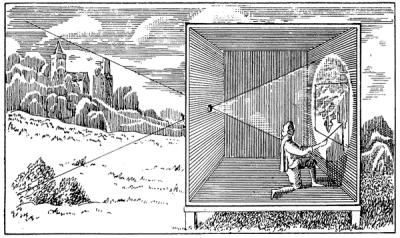

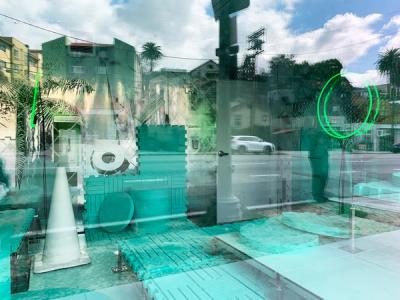
Within our always-on and habitually inattentive media culture, images reign as the prime medium of our distraction. On demand and seemingly immaterial, images flow everywhere: illuminated through pixel, pulsing in retinae, stored in silicon, and still ever-present in a range of photographic formats. Image Matters was an installation that interrupted the flow of images by insisting on their materiality and restaging the spatiality of their production. The project consisted of two parts. The first was an occupiable sliding-box camera named the Conditions Room, a study of the spatial consequences of image-making. Clad in neoprene foam, the careful paneling details elevated the light and thermal requirements for image-making to the level of architectural expression. Aluminum reproductions of these details were the substrates for the second part of this project, materially-rich photographic image-objects. These pieces were photo-sensitized through the use of wet-plate collodion photographic processing, an archaic procedure entailing the use of a metallic substrate to host a series of chemical and physical reactions that eventually produce a direct-positive photographic image. Once sensitized through the wet-plate process, our panels were exposed within the Conditions Room itself, capturing the image of digitally manipulated material textures that we designed and staged affront the Condition Room’s aperture. The resulting prints have unique physical properties. They have a texture and depth granting heightened material presence, vastly exceeding that of the typical snapshot or digital pic. The prints also have unique visual qualities — evincing familiar photographic effects while refusing to cede their object-quality to the realm of mere appearances. To contemporary audiences, our imageobjects might appear strangely familiar. They are unmistakably photographic and yet sufficiently distinct from most images to interrupt habitual consumption. Novel relationships emerge between the digital patterns imaged and the material consequences of the wet-plate process. The image-objects confuse the flat and the thick, the digital and archaic, precision and imprecision, all in order to disrupt or slow-down image circulation to secure moments of rare attention. Winner of ACSA Faculty Design Award Honorable Mention in 2019. Team: McLain Clutter, Cyrus Peñarroyo, Mike Amidon, Te-Shiou Chen Year: 2017–18