
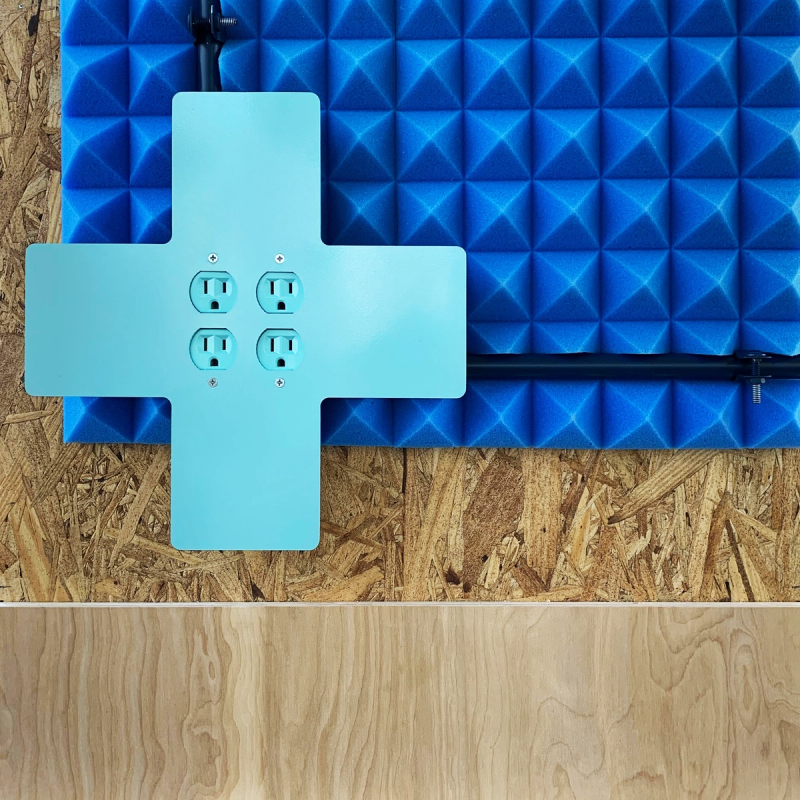

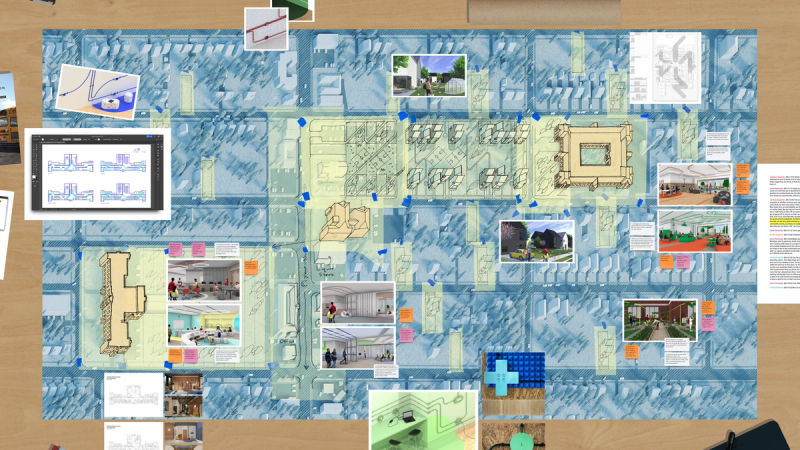

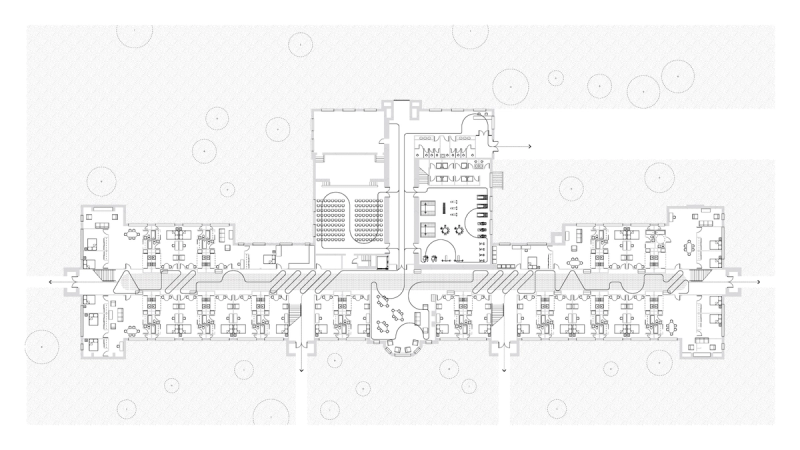

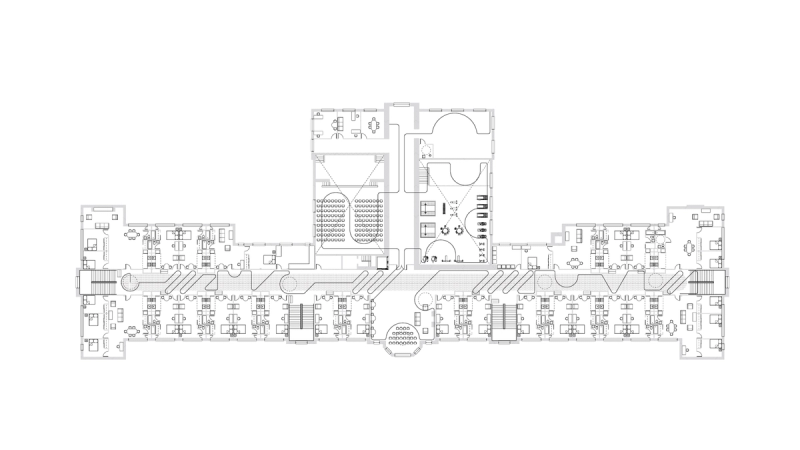

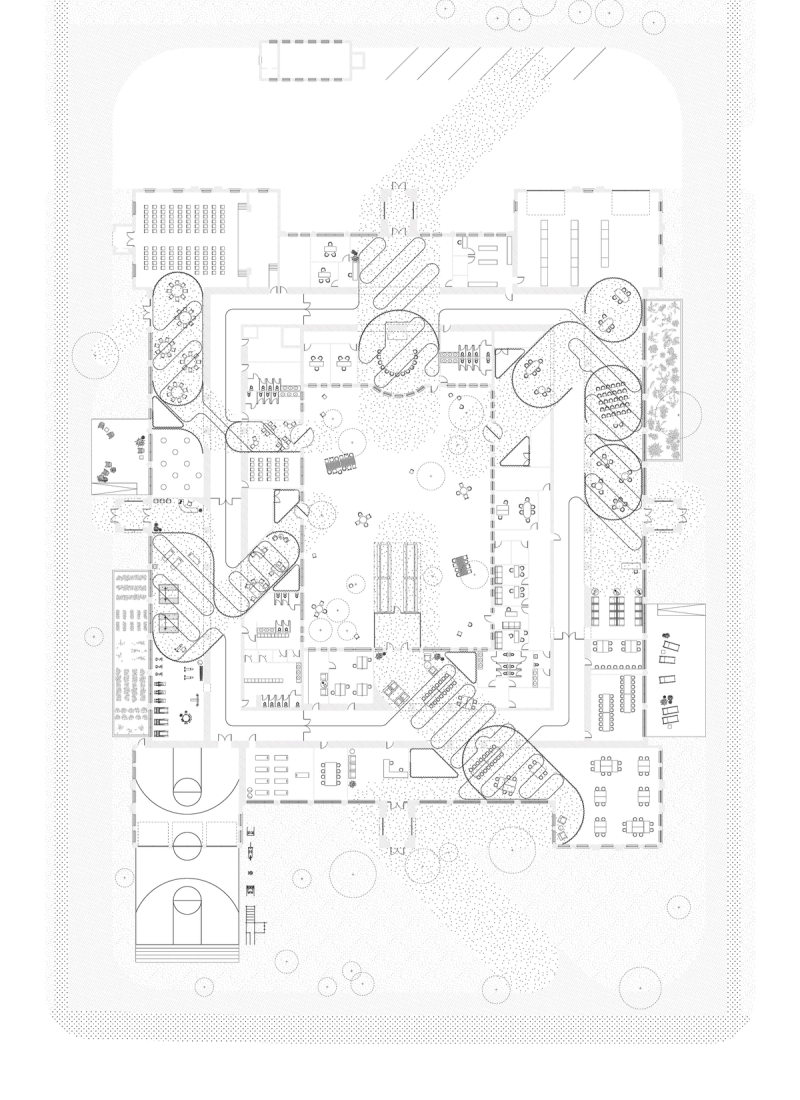




Network Structures developed prototypical adaptive reuse strategies to convert disused and abandoned school buildings throughout Detroit’s most disenfranchised neighborhoods into anchor institutions within community mesh networks, providing internet access and other critical social infrastructure to the surrounding communities. Detroit’s abandoned schools are often strategically positioned within the neighborhoods they once served such that they are ideal anchors for community mesh networks. Distinct from traditional hub-and-spoke internet networks, mesh networks interconnect distributed fields of routers, leveraging the bandwidths of multiple points of connectivity to create broad territories of wireless access. Routers might be housed within a community church or retail establishments; attached to residential chimneys or balconies; distributed on power lines or streetlights. As routers connect and combine points throughout urban space, they likewise articulate a diagram for the emergence of social networks, implicating new and emergent patterns of urban life. Advancing Peñarroyo’s prior research through a new set of partnerships, this project was a collaboration led by EXTENTS, with UM faculty at the Digital Studies Institute and Detroit’s first Director of Digital Inclusion, Joshua Edmonds. We further partnered with Tri-Unity CDC and focused our efforts on the Pride Area community. The project culminated in designs for the adaptive reuse of two schools in Pride, The Oakman School and George Parker Elementary School. In these proposals, the material necessities of introducing digital infrastructure into the abandoned buildings was the instigator for spatial and social transformation. Leads: McLain Clutter, Cyrus Peñarroyo Academic Partner: Sarah Murray Community Partners: Joshua Edmonds, David Underwood Assistants: Deanna Baris, Lucas Denit, Reed Miller, Axel Olson, Anmol Poptani, Anne Redmond, Ana Tang, Tanner Vargas Year: 2019–22